
close
Choose Your Site
Global
Social Media
Views: 0 Author: Site Editor Publish Time: 2026-10-23 Origin: Site
Silicon bronze is an engineering material among wrought copper alloys that offers a unique combination of corrosion resistance, excellent weldability, and non-sparking properties. It is widely used in B2B industrial sectors, including marine equipment, electrical fittings, fasteners, valves, and hydraulic piping systems. Within the ASTM B98 standard, C65100 (Low-Silicon Bronze B) and C65500 (High-Silicon Bronze A) are the most frequently used—and most easily confused—grades on the market. While both belong to the silicon bronze family, differences in their silicon and manganese content lead to significant variations in mechanical properties, formability, electrical conductivity, and fatigue resistance. Procurement professionals and structural engineers often conflate the two during the material selection process, which can result in quality issues such as cracking during cold heading, insufficient elasticity, or fatigue failure.
In this guide, we will systematically break down the key differences between C65100 and C65500 across six dimensions: chemical composition, mechanical properties, processing characteristics, corrosion resistance, electrical conductivity, and typical applications. This will help equipment manufacturers, fastener producers, and CNC machiningfirms make informed material selections, thereby optimizing both material costs and product reliability.
Silicon is the primary alloying element in silicon bronze; its concentration directly determines the alloy's fundamental properties, while manganese serves as a supplementary element that further strengthens the matrix and inhibits dezincification corrosion.
Si: 0.8%–2.0%
Mn: ≤0.7%
Cu: balance; Zn ≤1.5%; Fe ≤0.8%; total impurities are controlled
Si: 2.8%–3.8%
Mn: 0.5%–1.3%
Cu: balance; Zn ≤ 1.5%; Fe ≤ 0.8%; impurities strictly controlled
Positioning: A combination of high silicon and high manganese, providing a stronger solid-solution strengthening effect and significantly enhancing the strength of the matrix.
Higher silicon content enhances the alloy's strength, hardness, fatigue resistance, and wear resistance; however, it reduces ductility and electrical conductivity, and leads to a faster rate of work hardening.
C65100
Features medium strength, excellent plasticity, and a slow work-hardening rate during cold processing.
In the annealed state, it exhibits a tensile strength of approximately 380 MPa, a yield strength of about 140 MPa, and high elongation. It offers superior formability for cold heading, bending, and stamping, with a low risk of cracking during the forming process.
Well-suited for forming operations that require significant deformation, this alloy is the primary grade used for the cold heading of silicon bronze fasteners.
C65500
Features higher strength and hardness, with outstanding resistance to fatigue, wear, and galling; its strength is comparable to that of low-carbon steel.
In the annealed state, the tensile strength is approximately 490 MPa, and the yield strength is about 270 MPa. Strength increases significantly following cold working, which also results in a higher elastic limit.
Disadvantages: It exhibits a rapid work-hardening rate, making it prone to embrittlement during repeated or continuous cold-forming processes; consequently, it is less suitable for operations involving severe deformation, such as extensive cold heading or deep drawing.
C65100: Offers the best cold-forming performance among silicon bronzes. It performs reliably in the cold-heading of hexagonal bolts, nuts, and rivets, as well as in wire bending and tube flaring. It is well-suited for continuous production on multi-station cold-heading machines, resulting in a low rate of cracking in finished parts.
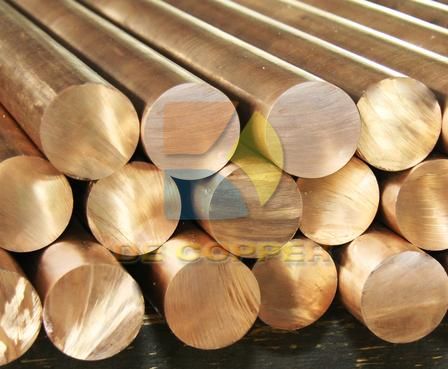
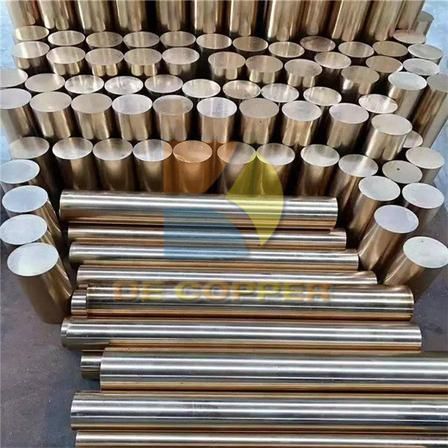
Both grades are lead-free silicon bronzes with moderate machinability. C65500 has higher hardness and greater cutting resistance, resulting in slightly higher tool wear compared to C65100. C65100, being more ductile, is prone to "sticking" (built-up edge) during machining; therefore, appropriate cutting parameters and cooling strategies must be employed.
Both alloys exhibit excellent weldability and are compatible with argon arc welding, gas welding, brazing, and resistance welding; the weld seams also demonstrate good corrosion resistance.
C65100 retains better plasticity after welding, making it suitable for piping and welded structural components, whereas C65500 maintains a higher strength level post-welding, making it better suited for components subject to alternating loads.
Silicon bronze exhibits excellent corrosion resistance in environments such as the atmosphere, fresh water, seawater, and most organic acids. Furthermore, it shows **no susceptibility to stress corrosion cracking**—a key advantage of silicon bronze over brass.
C65100: Offers good corrosion resistance, suitable for standard marine engineering, outdoor power infrastructure, and chemical or freshwater environments; ideal for moderately corrosive conditions, providing an excellent balance of performance and cost-effectiveness.
Neither is suitable for corrosive environments involving concentrated nitric acid, sulfides, or strongly oxidizing salts.
C65100: Features a low silicon content and higher electrical conductivity; suitable for applications requiring both electrical conductivity and corrosion resistance, such as power fittings, conductive connectors, and motor rotor bars.
C65500: Contains a higher proportion of alloying elements, resulting in lower electrical conductivity; it is not the preferred choice for conductive components, but is instead valued for its high strength, wear resistance, and fatigue resistance.
C65100
Fasteners such as bolts, nuts, screws, rivets, and U-bolts, manufactured from silicon bronze via cold heading
Power line hardware, cable clamps, conductive connectors, and motor rotor bars
Hydraulic systems, heat exchanger piping for the chemical industry, and welded structural components
General marine hardware and deck fittings for moderately corrosive environments
Wire and tubing requiring bending, flaring, or significant deformation during forming
C65500
High-load, cyclic fatigue applications: pump shafts, valve stems, tie rods, bushings, and wear-resistant sliding blocks
Heavy-duty structural components for offshore/marine engineering, bridge bearings, and wear-resistant plates
Springs and elastic elements requiring a high elastic limit and fatigue resistance
High-strength structural parts produced via precision CNC machining; non-sparking, explosion-proof components
Heavy-duty, corrosive environments characterized by both seawater erosion and vibration-induced wear


