
close
Choose Your Site
Global
Social Media
Views: 152 Author: Site Editor Publish Time: 2026-09-05 Origin: Site
Silicon bronze stands as a specialized, high-strength copper metal. Engineers consistently choose it for environments demanding severe corrosion resistance. It also provides excellent formability for complex manufacturing. You face significant risks if you specify the wrong grade for a project. Minor variations in the chemical makeup can drastically alter machinability. These variations also heavily impact weldability and structural compliance. Such errors often lead to expensive failures in critical marine applications. Industrial environments also suffer when materials fail unexpectedly under pressure. We created this guide to help engineering and procurement teams navigate these exact complexities. We will break down the foundational chemistry and key grade distinctions. We will also cover crucial verification standards required by modern industries. You will learn how trace elements dictate specific material behaviors. Ultimately, this knowledge ensures accurate material selection for your engineering teams. It guarantees highly reliable sourcing for your next critical manufacturing run.
Core Chemistry: The baseline silicon bronze chemical composition relies on 95–96% Copper (Cu) and 1–4% Silicon (Si), with trace elements dictating specific behavioral traits.
Grade Differentiation: Selecting between silicon bronze grades (e.g., C65100 vs. C65500) depends entirely on the required balance of tensile strength and cold workability.
Application-Specific Performance: Silicon acts as a primary hardener and deoxidizer, giving this silicon bronze alloy superior fluidity for casting and excellent TIG/MIG weldability.
Risk Mitigation: Material verification through Mill Test Reports (MTRs) and Positive Material Identification (PMI) is mandatory to prevent procurement of non-compliant or structurally inferior batches.
Every manufacturer must understand the exact elemental ratios involved. These percentages predict how the metal behaves under mechanical stress. The silicon bronze chemical composition determines everything from tensile strength to machining ease. Let us examine the specific elements driving these physical properties.
Copper forms the base matrix of the metal. It comprises the vast majority of the alloy. Typically, this base exceeds 94 percent of the total volume. Copper delivers the foundational corrosion resistance required for harsh environments. It provides necessary electrical conductivity for specialized components. It also ensures highly stable thermal properties during intense temperature fluctuations.
Silicon acts as the primary alloying agent here. Ratios usually range from 1 percent to 4 percent. Silicon functions as a powerful solid-solution hardener. It increases overall tensile strength significantly without causing extreme brittleness. It acts as an active deoxidizer during the melting phase. This chemical action removes dangerous impurities from the molten batch. It also enhances liquid fluidity for complex casting operations.
Manganese and zinc serve as vital refining elements. Manganese levels can reach up to 1.5 percent. It refines the internal grain structure during cooling. This refinement further improves tensile strength and weldability. Zinc also reaches up to 1.5 percent in the mix. It enhances machinability on the shop floor. It acts as an additional deoxidizer during pouring. Engineers keep zinc levels strictly low on purpose. This deliberate limit prevents dezincification in harsh saltwater marine environments.
Iron and lead act as strictly controlled trace variables. Iron adds minor structural strength and further grain refinement. It usually peaks at 0.8 percent maximum. Manufacturers must tightly control these iron levels during production. Strict control maintains the metal's inherently non-magnetic properties. Lead remains heavily restricted in modern formulations. Modern structural grades cap lead at roughly 0.05 percent. This maintains compliance explicitly with global environmental regulations. Key examples include RoHS and the Safe Drinking Water Act. Maintaining low lead also actively prevents hot-cracking during intensive welding processes.
Table 1: Standard Element Functions in Silicon Bronze
| Element | Typical Percentage | Primary Function in the Alloy |
| Copper (Cu) | 94% - 98.5% | Provides base corrosion resistance and thermal stability. |
| Silicon (Si) | 1.0% - 4.0% | Increases tensile strength and acts as a deoxidizer. |
| Manganese (Mn) | Up to 1.5% | Refines grain structure and boosts weldability. |
| Zinc (Zn) | Up to 1.5% | Improves machinability while remaining low enough to prevent dezincification. |
| Iron (Fe) | Max 0.8% | Adds minor strength; controlled strictly to prevent magnetic permeability. |
| Lead (Pb) | Max 0.05% | Kept extremely low to meet environmental standards and prevent weld cracking. |
You must choose correctly among the various silicon bronze grades. Slight element ratio adjustments change the fundamental mechanical properties entirely. Different ratios serve vastly different industrial applications across multiple sectors.
This specific grade contains roughly 98.5 percent copper. Silicon levels range from 0.8 to 2.0 percent. We evaluate it based on its superior cold workability. It offers much better thermal and electrical conductivity. We compare this directly to the higher-silicon variants available. You should specify C65100 for heavy-duty fasteners and cold-headed parts. It also excels when utilized in electrical conduits. These specific applications require moderate strength alongside extremely high ductility.
This structural variant contains about 97 percent copper. Silicon levels jump significantly to 2.8 through 3.8 percent. It maximizes absolute tensile strength and cyclic fatigue resistance. It becomes significantly harder to cold-work during secondary manufacturing. However, it excels deeply in heavy-duty structural applications. We strongly recommend C65500 for marine hardware and industrial pump shafts. It performs brilliantly for pressurized vessels and architectural building facades.
This specialized casting grade features over 94 percent copper. Silicon ranges broadly from 1.0 to 5.0 percent. It often includes slightly higher tolerances for secondary elements. Metallurgists engineered it specifically for optimal mold flow. The tailored chemistry ensures very low gas porosity. It guarantees clean, smooth surface finishes after casting removal. It works best for heavy industrial bearings and transmission gears. Sculptors use it for intricate artistic installations. Industrial plants rely on it for complex industrial valve bodies.
Always match the specific silicon percentage directly to your chosen forming method.
Select C65100 if your manufacturing process relies heavily on cold heading operations.
Specify C87200 explicitly when utilizing traditional sand casting or investment casting techniques.
Consult your tooling department before upgrading to higher silicon content grades.
Substituting high-silicon for low-silicon grades just to save upfront material costs.
Ignoring strict iron content limits when magnetic permeability truly matters for the application.
Failing to account for lower electrical conductivity when switching from standard pure copper.
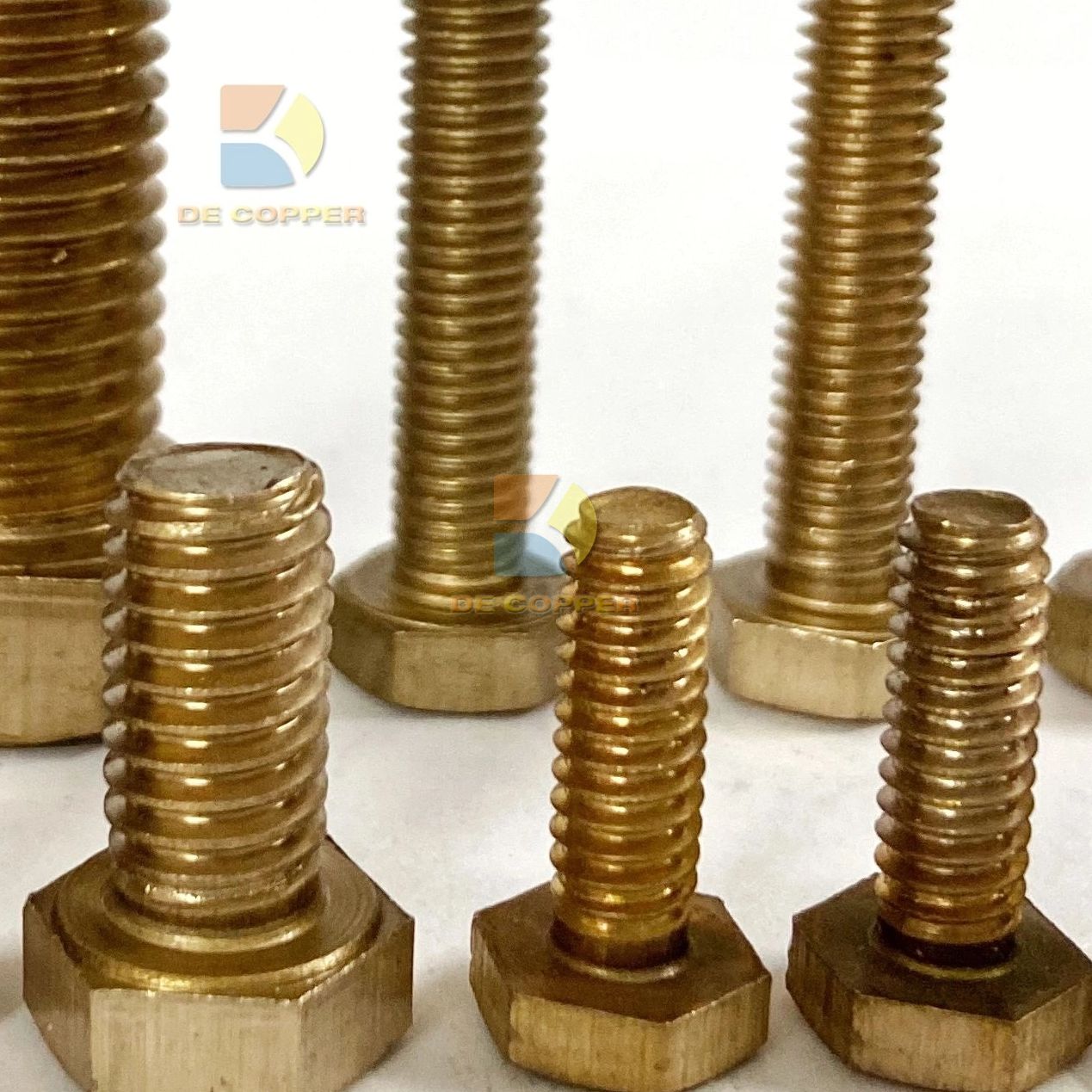
The precise elemental mix dictates actual field performance directly. A properly formulated silicon bronze alloy outperforms many standard industrial metals. It survives where basic steels and standard brasses fail rapidly.
The intentional absence of high zinc prevents catastrophic dezincification. Dezincification actively destroys standard brass parts in saltwater environments. This specific alloy remains highly resistant to harsh brine exposure. It withstands concentrated sulfite solutions easily in paper mills. It also handles non-oxidizing inorganic acids without degrading over time. You can confidently deploy these alloys in deep subsea infrastructure. They will not compromise structural integrity after decades of continuous submersion.
Machinists often find this metal notoriously gummy during cutting. We compare it frequently to standard free-machining brass alloys. The unique chemical composition requires highly specific machining strategies. You need exceptionally sharp carbide tooling to cut cleanly. You must maintain high cutting speeds consistently. You need ample coolant flow directed specifically at the cutting zone. These proactive steps prevent dangerous chip welding on the tool face. They also stop the material from work-hardening mid-cut.
The inherent deoxidizing nature of silicon makes this alloy highly weldable. It provides an exceptionally clean, porosity-free weld pool. It behaves ideally for precision TIG and GTAW processes. You generally do not need extensive pre-heating before striking an arc. The molten puddle flows predictably along the joint. It bridges gaps effectively between uneven joint surfaces. This reduces post-weld grinding and intensive cleanup operations significantly.
Industrial procurement involves navigating several hidden supply chain risks. The modern industry reality includes dangerously mislabeled alloys. Sometimes unauthorized suppliers import stock containing unacceptable lead levels. Excess iron ruins non-magnetic requirements for sensitive defense applications. You must implement strict internal compliance controls.
Ensure purchased material strictly conforms to relevant ASTM standards. Use ASTM B98 for solid rod and bar stock. Specify ASTM B96 for flat plate and sheet formats. Require ASTM B584 for all intricate sand or investment castings. These recognized standards dictate strict chemical boundaries. They prevent metallurgical deviations from compromising your final product.
You must verify every material batch upon physical arrival. Do not rely solely on initial supplier promises or sales brochures. Follow these rigorous steps to ensure total compliance.
Require certified Mill Test Reports (MTRs) before accepting physical delivery.
Ensure the provided MTR details exact heat lots and trace elements accurately.
Implement Positive Material Identification (PMI) directly on the receiving dock.
Use calibrated X-ray fluorescence (XRF) scanners for high-stakes aerospace applications.
Confirm exact silicon percentages and trace metal limits instantly before machining begins.
Choosing the right manufacturing partner remains absolutely crucial. You must look far beyond standard pricing models. A cheap but non-compliant alloy costs far more during a catastrophic field failure.
Evaluate potential suppliers based on actual stock availability. Check if they regularly hold your required raw shapes. Common shapes include extruded rod, drawn wire, and rolled sheet. Some heavy projects require raw cast ingots instead. Sourcing the exact dimensional shape minimizes secondary machining operations. This reduces overall production time and cuts labor costs significantly.
Specialized defense or aerospace contracts often require strict chemical adjustments. You must actively assess the manufacturer's custom melting capabilities. Ask if they can legally melt to custom restricted tolerances. Some advanced naval contracts demand maintaining ultra-low iron levels. This ensures strict magnetic permeability limits stay perfectly intact. Only highly specialized mills can control these trace elements reliably.
Define your exact technical criteria before requesting any formal quote. Supply the precise alloy grade clearly to the vendor. State the required material temper, such as H04 hard. List the necessary ASTM specification plainly on the purchase order. Describe the final application environment to the metallurgist. This transparency ensures highly accurate pricing upfront. It also guarantees realistic lead times directly from the casting mill.
Our deep dive shows how foundational chemistry dictates actual performance. The exact chemical makeup remains the absolute determining factor in physical strength. It actively controls part longevity and heavily influences manufacturability. Tracing elements like zinc and iron guarantees success in harsh environments.
Take these practical next steps to secure your critical supply chain immediately.
Base all procurement decisions on strict adherence to verified chemical specifications.
Choose C65100 for high formability needs and C65500 for maximum yield strength.
Demand and verify certified MTRs for every single inbound material batch.
Deploy routine XRF testing protocols for parts facing severe environmental stress.
Discuss custom melt tolerances with your supplier early in the design phase.
A: Standard structural silicon bronze grades contain trace amounts of lead. They are generally not approved for direct food contact. You cannot use them for potable drinking water systems unless explicitly certified as lead-free. They must strictly comply with NSF/ANSI 61 standard requirements before installation.
A: The metal is inherently non-magnetic by design. However, a chemical composition pushed near the maximum allowable iron content causes issues. Iron levels hitting around 0.8 percent can result in very slight magnetic permeability. This magnetic effect becomes much more noticeable after extensive cold working.
A: Yes, you certainly can. The alloy's unique chemistry makes it an excellent filler material. It works exceptionally well for joining dissimilar metals like standard steel to copper. You can use standard TIG or MIG brazing techniques. It features a favorable lower melting point and strong wetting characteristics.
A: The naturally high copper content allows the alloy to take chemical patinas exceptionally well. The added silicon provides a highly stable surface structure. It actively resists rapid, destructive oxidation over decades. This makes the metal highly valued in outdoor architectural and sculptural applications.


