
close
Choose Your Site
Global
Social Media
Views: 0 Author: Site Editor Publish Time: 2025-09-26 Origin: Site
In the world of metalworking, fasteners play an essential role in securing parts and components together across various industries. One of the most reliable and durable materials used for fasteners is phosphorous bronze. This alloy, known for its excellent strength, corrosion resistance, and superior conductivity, is widely used in critical applications where performance is crucial.
Phosphorous bronze is an alloy made primarily of copper, tin, and a small percentage of phosphorus, which gives the material its unique properties. The phosphorus in the alloy acts as a deoxidizer, which means it helps to remove oxygen from the molten copper during the alloying process. This results in a cleaner, more refined material. The addition of tin also enhances its strength, corrosion resistance, and wear resistance, making it a highly durable choice for various applications.
Phosphorous bronze is often categorized into two types based on its composition:
Phosphorous Bronze (CuSnP): The standard alloy with a tin content ranging from 0.5% to 1%. This type is used in applications requiring good strength, flexibility, and corrosion resistance.
High Phosphorous Bronze (CuSnP): This variant has a higher phosphorus content (up to 1.5%), which further improves its resistance to wear and fatigue, as well as its ability to withstand high-pressure applications.
Phosphorous bronze fasteners are renowned for their excellent combination of mechanical properties, making them suitable for a broad range of demanding applications. Their unique characteristics set them apart from other fastener materials, ensuring reliability and performance even in harsh and high-stress environments. Below, we delve into the key properties that make phosphorous bronze fasteners an ideal choice in various industries:
One of the most significant advantages of phosphorous bronze is its exceptional resistance to corrosion, particularly in environments exposed to moisture, chemicals, and corrosive elements. This makes it highly suited for applications in marine, aerospace, automotive, and industrial industries. Fasteners used in these industries often face exposure to harsh environments such as seawater, chemicals, and high humidity, all of which can degrade the material's strength over time. Phosphorous bronze's ability to withstand these corrosive elements makes it a reliable and long-lasting choice for critical fastener applications.
Phosphorous bronze is well-known for its high strength, which allows it to withstand significant mechanical stress without deforming. This material is particularly effective in high-impact and high-vibration environments, where other materials might fail due to fatigue. The alloy’s strength is complemented by its remarkable fatigue resistance, meaning it can endure repetitive stress cycles without experiencing material failure. This is a key factor in its use for fasteners in industries such as aerospace, automotive, and industrial machinery, where long-term performance and reliability are critical.
Another key property of phosphorous bronze is its electrical conductivity. Due to the copper content in the alloy, phosphorous bronze offers excellent conductivity, making it a preferred choice for electrical components. Fasteners made from phosphorous bronze are commonly used in applications involving electrical connectors, switches, springs, and other components that require both mechanical strength and electrical performance.
The presence of phosphorus in phosphorous bronze significantly enhances its wear resistance, making it a durable option for applications that involve frequent friction or movement. This resistance to wear is crucial in industries such as machinery manufacturing, where fasteners are constantly subject to mechanical forces, or in precision instruments, where minimal wear is essential for maintaining high performance over time.
Phosphorous bronze fasteners are non-magnetic, which is a crucial property for applications where electromagnetic interference (EMI) can disrupt the performance of sensitive equipment. This feature makes phosphorous bronze fasteners a top choice for industries such as medical devices, electronics, and high-precision fields where magnetic interference can impact the functionality of devices or systems.
Phosphorous bronze is known for its excellent formability, which makes it easy to machine and fabricate into various shapes and sizes. This property allows manufacturers to create precision fasteners that meet specific design requirements without compromising material strength. The formability of phosphorous bronze also makes it an ideal material for producing complex, customized fasteners that are critical in highly specialized industries.
Phosphorous bronze also exhibits excellent thermal conductivity, which allows it to efficiently transfer heat in applications where temperature management is essential. This feature makes it ideal for use in environments where fasteners need to perform under varying temperature conditions, such as in industrial machinery, aerospace, and automotive applications. Fasteners in such settings must not only secure components but also ensure that heat is dissipated efficiently to avoid overheating and potential failure.
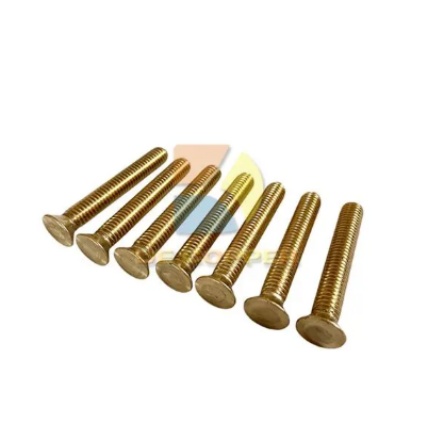
Phosphorous bronze fasteners are widely used in a variety of industries that demand high-performance, reliable fastening solutions. Some of the key applications include:
The aerospace industry demands materials that can withstand extreme conditions such as high temperatures, vibrations, and exposure to corrosive elements. Phosphorous bronze fasteners are commonly used in aircraft construction and maintenance due to their strength, fatigue resistance, and ability to withstand harsh environmental factors. These fasteners are often used in critical components such as engine parts, landing gear, and structural assemblies.
Phosphorous bronze is highly resistant to saltwater corrosion, making it the material of choice in marine environments. The material’s resistance to corrosion and wear makes it ideal for marine and offshore applications, such as shipbuilding, offshore oil rigs, and other aquatic infrastructure where exposure to saltwater is constant.
Due to its excellent electrical conductivity, phosphorous bronze is widely used in the manufacturing of electrical components. Fasteners made from this material are used in electrical connectors, terminals, and contacts, ensuring optimal electrical performance. Phosphorous bronze is essential in industries ranging from consumer electronics to power generation.
In automotive applications, phosphorous bronze fasteners are valued for their high strength and corrosion resistance, making them suitable for use in engines, suspension systems, and braking components. These fasteners are also used in industrial machinery, pumps, and valves, especially in environments exposed to moisture or chemicals.
Phosphorous bronze is often used in precision instruments and medical devices. Its durability, corrosion resistance, and fatigue resistance are essential in ensuring the longevity and reliability of devices used in critical medical procedures and high-precision measurements.
Phosphorous bronze fasteners stand out from other materials due to the following key advantages:
Excellent Corrosion Resistance: Unlike steel or iron fasteners, phosphorous bronze fasteners are highly resistant to corrosion, making them ideal for use in harsh environments, particularly marine and industrial settings.
High Strength-to-Weight Ratio: Phosphorous bronze offers an excellent strength-to-weight ratio, which means it can handle significant mechanical stress while keeping weight to a minimum. This is particularly valuable in industries like aerospace and automotive, where minimizing weight is crucial.
Improved Fatigue Resistance: Due to its high fatigue resistance, phosphorous bronze fasteners can endure repeated stress cycles without failure, making them ideal for high-vibration or repetitive motion applications.
Ease of Machining: Despite its impressive strength, phosphorous bronze is easy to machine, allowing manufacturers to create fasteners with precise specifications. This makes it a cost-effective solution for producing high-quality fasteners.
Non-Magnetic Properties: The non-magnetic properties of phosphorous bronze are crucial in industries where electromagnetic interference must be minimized, such as in medical devices and electronic equipment.
Durability and Longevity: Phosphorous bronze fasteners are durable and long-lasting, even in harsh environments. This results in fewer replacements and lower maintenance costs over time.
When comparing phosphorous bronze fasteners to other common materials such as stainless steel, brass, and aluminum, phosphorous bronze stands out for several reasons:
Phosphorous Bronze vs. Stainless Steel: While stainless steel offers high strength and corrosion resistance, phosphorous bronze provides superior fatigue resistance and electrical conductivity. Additionally, phosphorous bronze is often more cost-effective than stainless steel for certain applications.
Phosphorous Bronze vs. Brass: Brass, like phosphorous bronze, is copper-based but lacks the same level of wear resistance and fatigue strength. Phosphorous bronze fasteners are more durable in high-stress applications and perform better in environments subject to frequent motion.
Phosphorous Bronze vs. Aluminum: Aluminum is lightweight and corrosion-resistant, but it does not offer the same level of strength or wear resistance as phosphorous bronze. For high-stress, heavy-duty applications, phosphorous bronze is the superior choice.
Phosphorous bronze fasteners offer a combination of strength, durability, corrosion resistance, and electrical conductivity that make them an ideal solution for a variety of critical applications. Whether you're working in aerospace, marine, automotive, or electrical industries, choosing the right fastener material is essential for ensuring long-term performance and reliability. The unique properties of phosphorous bronze, including its high fatigue resistance and corrosion resistance, make it an excellent option for fasteners that need to endure extreme conditions.
If you're looking for high-quality phosphorous bronze fasteners or need expert guidance on selecting the best materials for your specific applications, DECOPPER offers a range of tailored solutions to meet your needs. Their experienced team is available to help you choose the right fasteners for your projects, ensuring optimal performance and reliability


